

Beyond The Shack: Exploring The World of POTA and SOTA
| Parks On The Air | Summits On The Air |
|---|---|
| Focuses on national parks and nature reserves. It is generally more accessible, with parking and camping friendly areas. This gives participants the ability to use battery powered radio equipment and operate from their vehicle (where permitted). With lower entry requirements and longer operating sessions, POTA is an attractive option for newcomers, people with disabilities or anyone wanting a convenient outdoor amateur radio experience. | Focuses on mountain peaks and usually involves hiking or climbing. It also has stricter rules (no operating from motor vehicles) defining it as more of an expedition activity where all equipment must be carried to the location. The combination of self-sufficiency and portable operation makes it both a physical and technical challenge, rewarding careful planning, lightweight station design and efficient operating methods. |
| Parks On The Air | Summits On The Air |
|---|---|
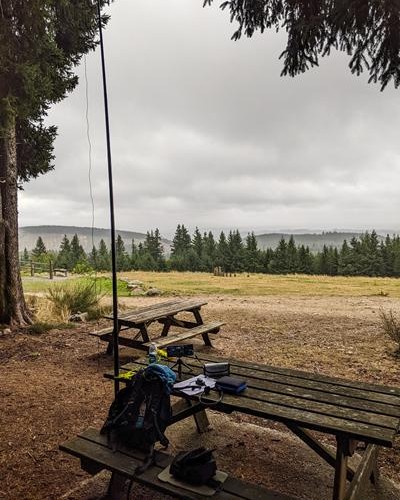
| Location: You must be within the legal boundary of a POTA recognised park (e.g. Peak District, South Downs or smaller local reserves). Equipment: Unlike SOTA, you can operate from a vehicle or use a generator, provided you are within the park boundary and following the park's rules. Contacts: You need at least 10 contacts for successful activation, though you can still upload fewer just to give out points. Registration: Sign up for a free account from www.parksontheair.com. |
The Activation Zone: To activate a summit, you and all of your equipment must be within the top 25 vertical metres of the summit. No Engines: You cannot use a fossil-fuelled generator or stay inside a motor vehicle. You must hike/ bike/ climb to the location. Contacts: To get points for an activation, you must make at least 4 contacts (QSOs). These can be on any band (FM, SSB, CW or Digital). Registration: Create a free account on www.sota.org.uk to upload your logs. |
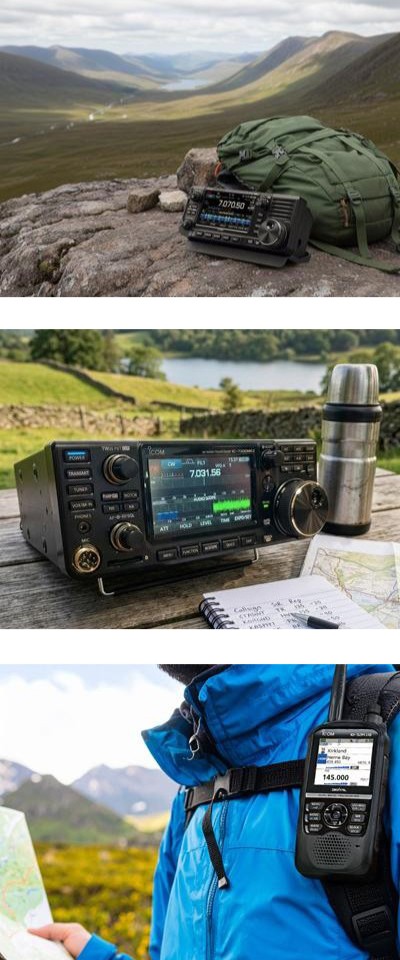
All-Mode/All-Band: The IC-705 also provides HF, VHF and UHF simultaneously. Having this flexibility to switch bands and modes (including SSB, CW, AM, FM and digital) allows adaptive operating strategy to suit current band conditions, time of day and available antennas.
Accessories: Compatible with the AH-705 antenna tuner, which is designed specifically for portable use. IC-7300MK2 HF/50/70 MHz Transceiver Efficiency: The IC-7300MK2 has a lower RX current draw, ideal for battery-powered, solar or off-grid operation.
Antenna tuning: It also includes a built-in antenna tuner with an Enforced Tuning function for emergency, non-resonant antenna matching.
Power on the go: The 100W power, built-in speaker and large, intuitive touch screen make it ideal for setting up at a picnic table for pileup generating activation.
Portable Decoding: The IC-7300MK2 includes a built in CW decoder, allowing operators to decode Morse code directly on the screen without needing an external PC. IC-52E PLUS or ID-50E Rugged design: IPX7 waterproof rated and operational within a temperature range of -20°C to +60°C, both the IC-52E PLUS and the ID-50E are ready for any weather.
Built-in GPS: Automatically identifies your precise location, allowing you to quickly find nearby repeaters, plot your path and share your coordinates with other operators.
USB / Type C charging: Convenient for outdoor adventure as it allows for charging via a power bank or solar setup and eliminates the need for a fixed mains outlet. Other Useful Tips Lastly, here are some essential things to consider before and during your outdoor activities: Leave No Trace: Always respect the environment no matter where you are. Taking your litter with you or putting it in a designated bin is rule number 1, but it also worth remembering that digging up plants and gathering wood or fungi can be damaging and are even forbidden in some areas. Safety First: Especially for SOTA, ensure you have the right hiking gear and first aid supplies just in case. Checking the weather and adequately preparing for it ahead of your trip will also keep you safe, so that you can focus on the exiting stuff. Battery Management: Efficient power use (specifically low power QRP rather than high power QRO) is recommended for POTA and SOTA. By minimising current draw, activators can extend operating time, carry lighter power sources and simplify their overall setup. QRP also encourages careful band selection, precise tuning and disciplined operating practices, making each successful contact feel more rewarding. Whether you choose to visit a quiet park or hike to a breath-taking summit, Icom radios have everything you need for your POTA or SOTA adventures.
So start exploring, stay safe and above all, have fun! If you want to know more about the IC-705 for POTA activities, watch our video: Icom IC-705 for POTA (Parks on the Air) with David Owen G0OES Or if you would like more information on our Amateur range, you can call us on 01227 741741 or email us at sales@icomuk.co.uk. POTA is a trademark of Parks on the Air Community Inc and SOTA is a trademark of the Radio Society of Great Britain. This article is for informational purposes and is not endorsed by POTA or SOTA.