

IOTA - What Is It All About?
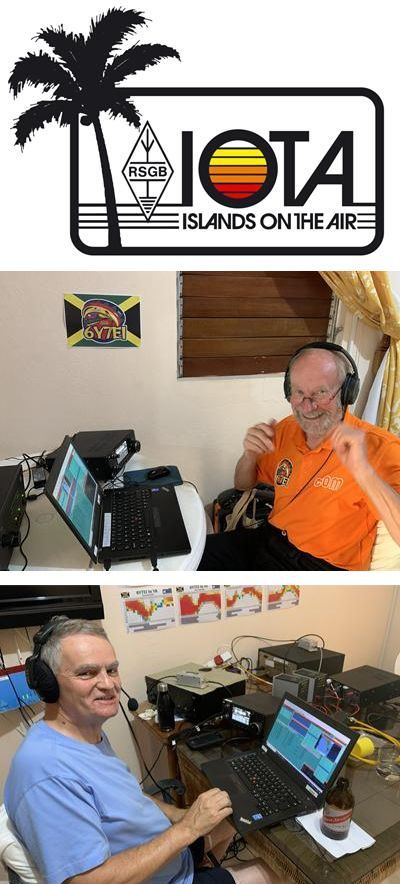
Islands On The Air (IOTA)
So how do you join in and which Icom radios work best for activators or chasers? First, you can actually be both activator or chaser. I started as a chaser when I got my licence in 1986 and since then I’ve activated a few UK islands from the easily accessible Isle of Wight (EU-120) to the more logistically demanding Isles of Scilly (EU-011) and collected over 500 of the 1200 IOTA groups. Many of these contacts might already be in your logbook. This is why keeping a good log is important, especially for tracking the countries you’ve worked and confirmed, either with a QSL card, on the ARRL LOTW platform or through ClubLog QSO matching. You need confirmed contacts through one of these three ways to get the award. Once you have confirmation, upload your info to the IOTA website. After a few days, you’ll get your award and your score will be updated. If you use QSL cards, send them to a card checker. There are many volunteer card checkers worldwide and in your area. If everything checks out your cards will be added and returned to you if you include a self-addressed envelope and postage. First, register with IOTA for free on their website. There is a fee for awards which covers admin costs and helps fund expeditions to rare islands. Check your logbook and compare it with the island lists. Each continent has a two-letter code before the reference number. For example, the Canary Islands (EA8) use AF-004 because they are part of Africa, Australia is OC-001 for Oceania and Japan has several codes but is usually AS-007 for callsigns JA1 to JA0. The UK mainland is EU-005 for Europe. You can find all these details on the IOTA website under the Directory tab. Since most IOTA activity is on HF any of our radios will work. If you plan to activate an island, the IC-705 or IC-7100 are a great choice, especially if you’re operating from your car. A simple wire antenna will get you on the air and with the AH-705 tuner, you can use multiple bands. An HF mobile whip on your car also works well. If you’re at home, radios like the IC-7300MK2 or IC-7610 with your usual antennas will get you into the IOTA logbooks. As mentioned earlier, you can combine IOTA with POTA or SOTA by including the island’s reference. In the UK, you might be operating from a national park (POTA) or a summit in the Peak District (SOTA) which would use the IOTA reference EU-005. In fact in this example you have three award schemes. It may not be rare, but IOTA chasers, especially beginners, will appreciate it.VHF/UHF activations
There aren’t many IOTA activations on VHF or UHF but they do happen. More expeditions now include 6 metres and many of our radios like the IC-705, IC-7100, IC-7300MK2, IC-7610 and IC-7760 cover this band, so you just need the right antenna. When conditions are good you can make worldwide contacts. Many stations on islands use large antennas and focus on this band and they’ll be happy to confirm a contact for your award. They might also be activating POTA or SOTA, so you could get a bonus contact that counts toward the VHF DXCC award. Watch the clusters and DX news pages for IOTA announcements and expedition spots. I use DX Heat and Ham Radio World. Don’t forget to register, check your logbook and enjoy the excitement of chasing new contacts. For IOTA, you only need one contact with the team on any band for it to count, since HF isn’t band specific. Go on, give it a go and be part of this worldwide award. . Chris ColcloughG1VDP
Icom UK Amateur Radio Specialist