FT8 – The Digital Revolution!
In the world of Amateur radio, few topics have generated as much conversation, debate and excitement as FT8. Often described as the "Marmite" of the HF bands, it is a mode that has truly divided opinion while simultaneously becoming the most popular digital format in use today.
Whether you view it as a technical marvel or a shift away from traditional operating, there is no denying its power on the airwaves. FT8 has allowed thousands of operators to maintain global connections during solar minimums and from modest home stations that would otherwise remain silent.
Cruising the Digital Frontier
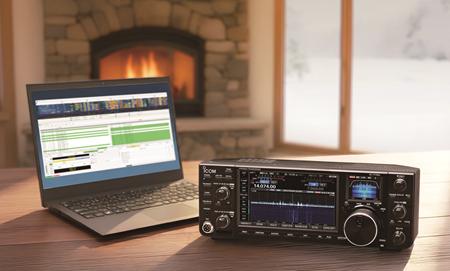
A common misconception is that FT8 is strictly a low-power mode. In reality, it can be used across any power level, from a QRP (low-power) portable station to a high-power QRO setup. Because it utilises a razor-thin 50Hz bandwidth for tone transmission, it occupies a minimal footprint on any given Amateur band, typically clustered around the standard data allocations, such as 14.074 MHz on 20M, 7.074 MHz on 40M, and 3.574 MHz on 80M.
The mode continues to evolve. Recent software developments are paving the way for FT8 to be used more like a conversational, "free typing" mode which will inevitably change how enthusiasts interact with it in the future.
The Debate: Machine vs. Operator
FT8’s rapid rise to dominance has not been without controversy, earning it a poor reputation in certain corners of the hobby where some see it as the death of traditional Amateur radio, while others champion it as its saviour.
Much of this debate stems from how the software interacts with the radio. Some operators look upon the mode negatively because it can be configured to run as an automatic receive/transmit "bot". This allows a station to continuously log contacts even when the operator is away from the position or not actively monitoring the screen. Others view this simply as two computers talking to each other, which is effectively how almost all modern digital modes function. Even RTTY has largely transitioned into a computer-to-computer format. While the chattering noise and smell of oil from old mechanical teletype machines remain a nostalgic memory of a halcyon era, modern digital mode enthusiasts rely almost exclusively on software.
However, leaving a station fully automated and unattended carries inherent risks. Without an operator present, there is no way to manage sudden hardware or environmental issues, such as incoming thunderstorm damage or a power surge causing a equipment fault. Responsible operation remains a vital component of the hobby and this automation boundary continues to be a central topic of discussion in the community.
Ready Out of the Box: The Icom SDR Lineup
If you are looking to explore the digital frontier for yourself, getting on the air is easier than ever with modern equipment. The current range of Icom HF transceivers is designed with digital operation in mind.
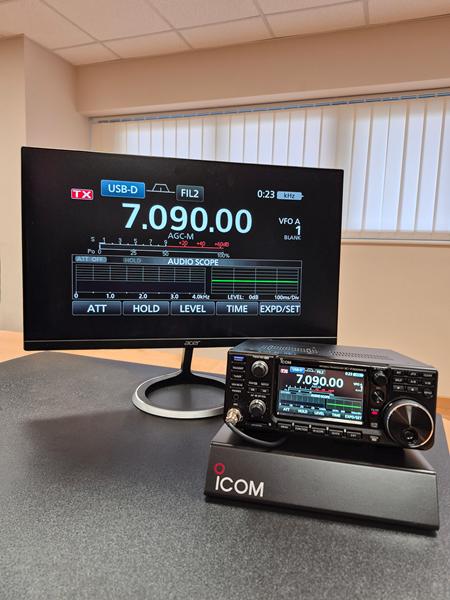
For our current SDR-based transceivers including the IC-705, IC-7300, IC-7610, IC-7760 and IC-9700 there is no need for external hardware interfaces. They feature a direct USB connection that plugs straight into your PC or laptop to handle both rig control and audio.
Whether you love the mode or hate it, it remains a dominant force on the bands today.
Explore our full range on our
'Icom Amateur_Radio Homepage'.
Read more about FT8 in our article:
'Getting Started with FT8: A Practical Guide for Icom Users'.